Costs & Who to Call
Who Removes Dead Animals From Roads in Victoria?
In Victoria, who removes dead animals from the road depends on the type of road. Freeways and main arterial roads are the responsibility of the Department of Transport and Planning, while local streets, laneways and the footpaths beside them are looked after by your local council. Private roads, driveways and shared estate roads usually fall to the owner or the owners corporation. You report the animal to whoever manages that stretch, and they arrange collection.
Getting the right authority first time saves a lot of being passed around. Below is how to tell which kind of road you're on, what to say when you report it, and how to stay safe. If the animal has ended up on your side of the fence, our dead animal removal service in Melbourne can collect it from private land.
Who removes dead animals from the road? Telling road types apart
Most people know a freeway when they see one, but the line between a main road and a local street isn't always obvious. As a rough guide:
| Type of road | Common clues | Usually managed by |
|---|---|---|
| Freeway or tollway-style road | Divided lanes, on and off ramps, high speed limit, no driveways | Department of Transport and Planning |
| Main arterial road | Major through-route between suburbs, several lanes, traffic lights, often a bus or tram route | Department of Transport and Planning |
| Local street, court or laneway | Residential, lower speed, mostly local traffic | Your local council |
| Private road, driveway or estate road | Gated, signposted as private, or inside a strata development | Owner or owners corporation |
If you're still not sure, start with your council. Council customer service teams field these calls all the time and will usually tell you if a road belongs to the state.
How to report a dead animal on a road
A precise report gets a faster response. Before you contact anyone, note:
- The exact spot: nearest house number, cross street, or a landmark such as a bus stop, bridge or service station.
- Direction and lane: which side of the road, which direction of travel, and whether it's in a traffic lane, the shoulder, the gutter or the median.
- What it is: a possum, cat, dog, kangaroo, deer or bird, plus a rough size.
- Any hazard: say clearly if it's blocking a lane or causing drivers to swerve.
Councils typically take reports through an online request form or their phone line. For state-managed roads, use the Department of Transport and Planning's reporting channels. If a large animal is causing an immediate danger to traffic, treat it as an emergency and call 000.
Staying safe at the roadside
Pulling over for an animal on a busy road is genuinely risky, so the rule is simple: your safety first, the animal second.
- Never stop on a freeway or high-speed road to look at or move an animal.
- On a quieter street, pull fully off the road, switch your hazard lights on and keep well clear of traffic.
- Don't walk into a traffic lane to drag a carcass out.
- If you do move a small animal off a quiet local road, wear gloves or use a shovel, and wash your hands afterwards.
- Keep children and dogs in the car.
Kangaroos, wombats and other wildlife on the road
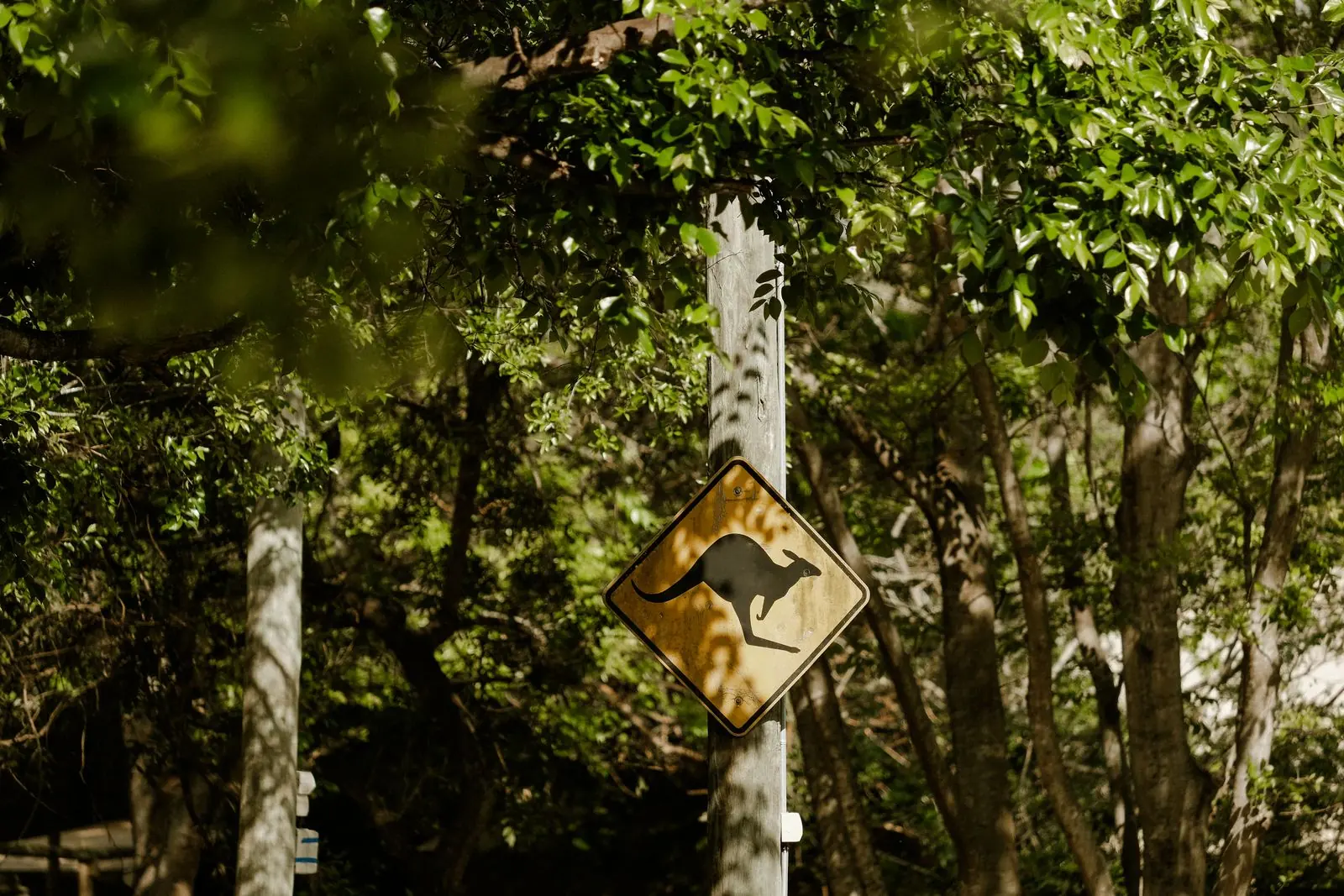
On Melbourne's fringe, roadkill is often native wildlife. A dead female kangaroo, wallaby or wombat may have a living joey in her pouch, and joeys can survive for days after the mother has died. If it's safe to stop, a pouch check can save a life; if it isn't, call Wildlife Victoria on (03) 8400 7300 and give them the location. Leave any joey attached to the teat for a trained rescuer.
Injured wildlife on the road is also a Wildlife Victoria call, since our work begins only once an animal has died. For a kangaroo that has ended up on your farm or block instead, see our guide to a dead kangaroo or wallaby on your property, and for heavier animals our guide to a dead deer on your property.
A cat or dog hit by a car
Finding someone's pet on the road is upsetting, and it helps to know there's usually a way to reach the family. Some councils will scan a dead cat or dog for a microchip so the owner can be told. When you report it, say clearly that it's a pet, and describe the colour, breed and any collar or tag. If you know whose animal it is, a gentle knock on the door is often kinder than leaving it to the council.
Our guide on finding a dead cat or dog on the street covers what to do with more care and detail.
When the road isn't a public road
Not every road is looked after by the government. In a gated estate, retirement village, unit complex or industrial park, the internal roads and car parks are often common property managed by an owners corporation. In that case, tell your strata or building manager, who will usually organise removal. Our guide to a dead animal in an apartment or strata building explains who tends to handle what.
Your own driveway and the land inside your boundary are generally your responsibility. The nature strip is usually council land, and many councils will collect from it if you report the animal, though some ask residents to handle small animals. Our article on whether the council will remove a dead animal from your property covers those private-land grey areas.
What if nobody comes?
Occasionally an animal on a road stays put for longer than you'd like, especially on a quiet street over a weekend. If it's been a few days, follow up your original report with the reference number if you were given one. If the animal has been moved onto your nature strip or into your driveway, or the smell is reaching your house, you can arrange private removal. Cost depends on the size of the animal, access and any clean-up; our cost guide explains the factors.
Need it gone today? If a dead animal from the road has ended up in your driveway, yard or nature strip, we can collect it and clean up, often the same day. Call (03) 9125 4024 or send us a message.