Pets & Large Animals
Can You Bury a Pet in Your Backyard in Victoria?
In many parts of Victoria you can bury a pet in your own backyard, but it depends on your council and comes with conditions. Councils that allow it generally expect a deep grave, a good distance from waterways, tanks and pipes, and the owner's permission if you rent. Because the rules differ across Melbourne's councils, check your council's local laws or call them before you dig.
Choosing to bury a pet at home is a lovely way to keep them close. This guide explains what to check, how to do it safely and respectfully, and the alternatives if burial at home is not possible. If you need help moving your pet first, our dead pet removal service in Melbourne can collect them with care.
Can you bury a pet in your backyard in Victoria? What the rules usually cover
There is no single statewide rule for burying a cat, dog or other small pet at home. It is mostly a matter for local councils, and their approach varies. When councils do set conditions, they tend to deal with the same things:
- Depth: deep enough that foxes, dogs and other animals cannot dig the grave up.
- Water: well away from creeks, drains, dams, bores and rainwater tanks so nothing leaches into water.
- Property: on land you own, or with written permission from the owner if you are renting.
- Size of animal: small pets are treated differently from horses and livestock, which fall under separate disposal guidance.
Some councils, particularly in denser inner suburbs, may discourage home burial altogether. A quick search of your council's website for "pet burial" or a phone call will settle it.
Before you dig: a short checklist
- Check with your council. Confirm home burial is allowed and whether there are distance or depth requirements.
- Ask your vet one question if your pet was put to sleep: is it safe to bury them? Medicines used for euthanasia can remain in the body, and wildlife or dogs that dig up and eat from the remains can be poisoned. Your vet can advise, and may suggest cremation instead.
- Look for services underground. Water, sewer, gas, stormwater and power can all run through a backyard. Avoid areas over or near pipes, septic systems and easements.
- Think about the future. If you might sell or move, the grave stays with the house. Some families prefer cremation for this reason and keep or scatter the ashes.
- Choose the spot. A quiet corner away from vegetable gardens, the house, fences and anywhere water pools after rain.
How to bury your pet safely and respectfully
Once you know burial is allowed, take your time with it. Many families find the process itself helps them grieve.
Preparing your pet
- Wrap your pet in a natural material such as a cotton sheet, towel or wool blanket. These break down in the soil.
- Avoid plastic bags and synthetic fabrics, which do not decompose and slow the natural process.
- A plain, untreated timber box or a cardboard box is fine if you would like a casket. Avoid treated or painted timber.
- You can place a favourite collar or small toy with them, as long as it is a natural material.
Digging the grave
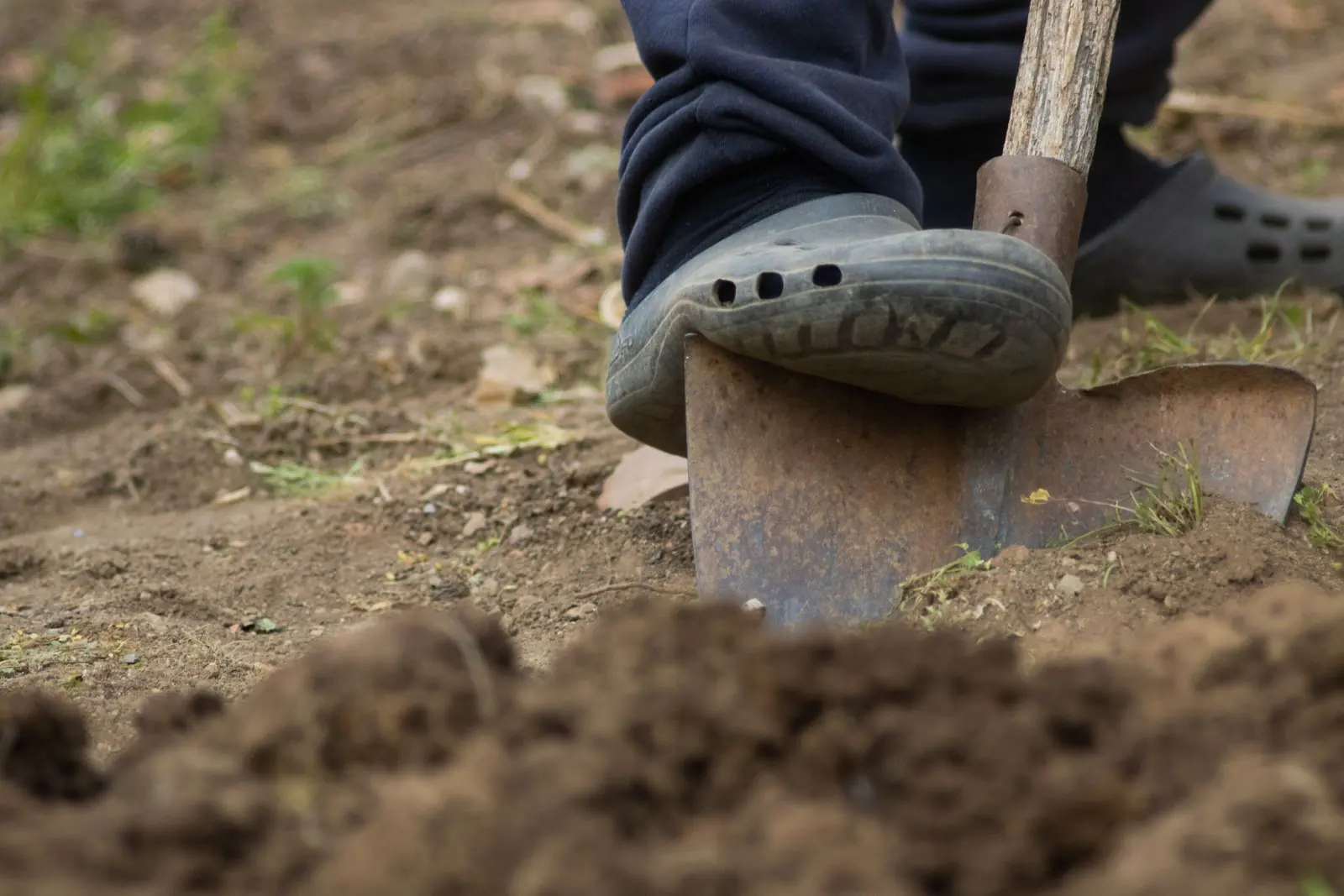
- Dig deep. As a practical guide, aim for a good metre of soil on top of your pet, deeper for a larger dog. A shallow grave is the most common reason a burial goes wrong.
- Make the hole wide enough to lay your pet on their side without forcing them in.
- Melbourne's clay soils can be very hard in summer and heavy when wet. Allow plenty of time, and ask someone to help if you have a large dog.
Closing and marking it
- Backfill with soil and firm it down as you go.
- Place a heavy paver, flat stone or a planter over the top to discourage digging by foxes and dogs.
- Many people plant a shrub nearby or add a small plaque. Avoid planting fruit or vegetables directly over the grave.
If you rent your home
Burying a pet in a rented backyard without permission is not a good idea. The land belongs to the owner, there may be pipes or plans for the yard you don't know about, and you will not be able to visit once you move out. Ask your landlord or agent in writing first. If they say no, cremation lets you keep your pet's ashes with you wherever you live. Our guide on dead animals in rental properties covers the wider landlord and tenant side.
Alternatives to backyard burial
| Option | Why families choose it |
|---|---|
| Individual cremation through your vet | Ashes returned to you, nothing to dig, easy to arrange. |
| Pet crematorium | More choice of urns and keepsakes; some offer a farewell room. |
| Burying or scattering ashes at home | Keeps your pet in the garden without the depth and water concerns of a full burial. |
| Pet cemetery | A permanent, maintained resting place you can visit even after moving. |
| Collection service | Helpful if your pet is large, you have no car, or you cannot face moving them. |
For a gentle walk through the first few hours after a loss, read what to do when your pet dies at home. For a horse, pony or farm animal, burial is a different matter with its own guidance; see our article on dead livestock and horse disposal.
When burial at home is not practical
Sometimes the ground is too hard, the yard too small, the weather too hot to wait, or the grief simply too heavy to pick up a shovel. That is completely understandable. We can come to your home, wrap your pet carefully and take them away, and if your pet passed somewhere difficult, such as under the house or deck, we can retrieve them and clean the area.
Cost depends on your pet's size, where they are and the time of day, and is explained on our dead animal removal cost page. If you are weighing up the vet, a crematorium or a collection service, our overview of who removes dead animals in Melbourne sets out who does what.
Need it gone today? If burying your pet at home isn't possible or you need a hand moving them, we can collect your pet gently, day or night. Call (03) 9125 4024 or send us a message.